

Every brand wants page-one Google visibility but most waste money on ads before fixing the basics. In 2025, Google rewards topical authority, not just keywords.
Start with a content cluster strategy: pick one core topic (e.g., “digital marketing for startups”) and write 10–15 interconnected blog posts around it.Link them internally. This signals to Google that your site is the go-to resource on that topic.
Next, fix your Core Web Vitals. Google uses page speed, interactivity, and visual stability as ranking signals. Run your site through PageSpeed Insights and eliminate render-blocking resources.
For on-page SEO, put your primary keyword in the title, first paragraph, one H2, and the meta description. Don’t keyword-stuff write for humans first.
Finally, earn backlinks through guest posting, digital PR, and creating data-driven content others want to cite. Organic SEO compounds over time start now, and in 6 months you’ll own traffic your competitors are paying for.
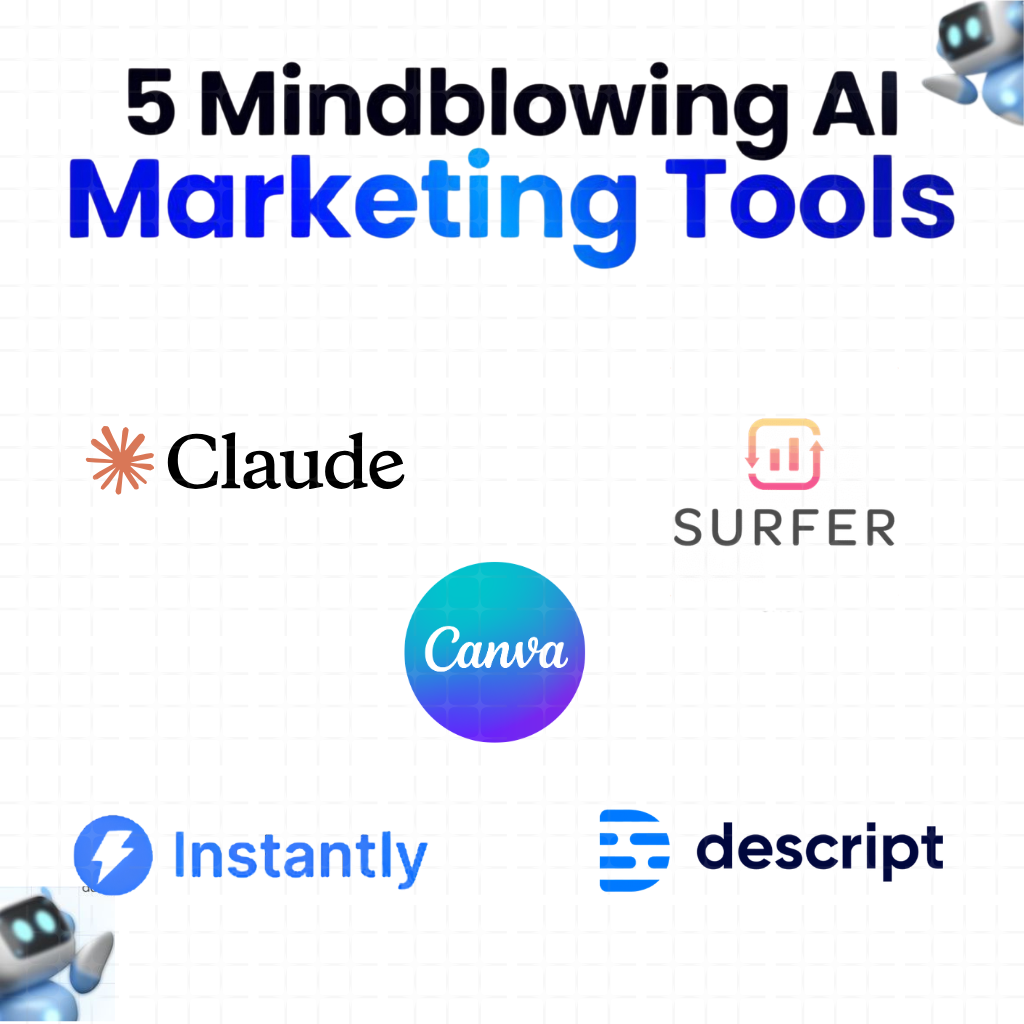
The playing field has flattened. A solo founder with the right AI stack can now produce marketing output that used to require a team of 5. Here’s what that stack looks like in 2025.
1. ChatGPT / Claude — Content creation, email copy, ad scripts, blog posts. Feed it your brand voice and it writes on-brand consistently.
2. Canva AI — Design entire social posts, carousels, and ad creatives using text prompts. No designer needed.
3. Surfer SEO — AI-driven SEO editor that tells you exactly what to include in your content to outrank competitors.
4. Instantly.ai — Cold email automation with AI-personalized sequences at scale. Handles follow-ups automatically.
5. Descript — Record once, repurpose everywhere. AI removes filler words, generates captions, clips videos, and creates transcripts automatically.
The strategy is simple: use AI to execute, and use your human judgment to direct. The brands that win in 2025 are the ones that move faster and these tools make speed achievable for everyone.
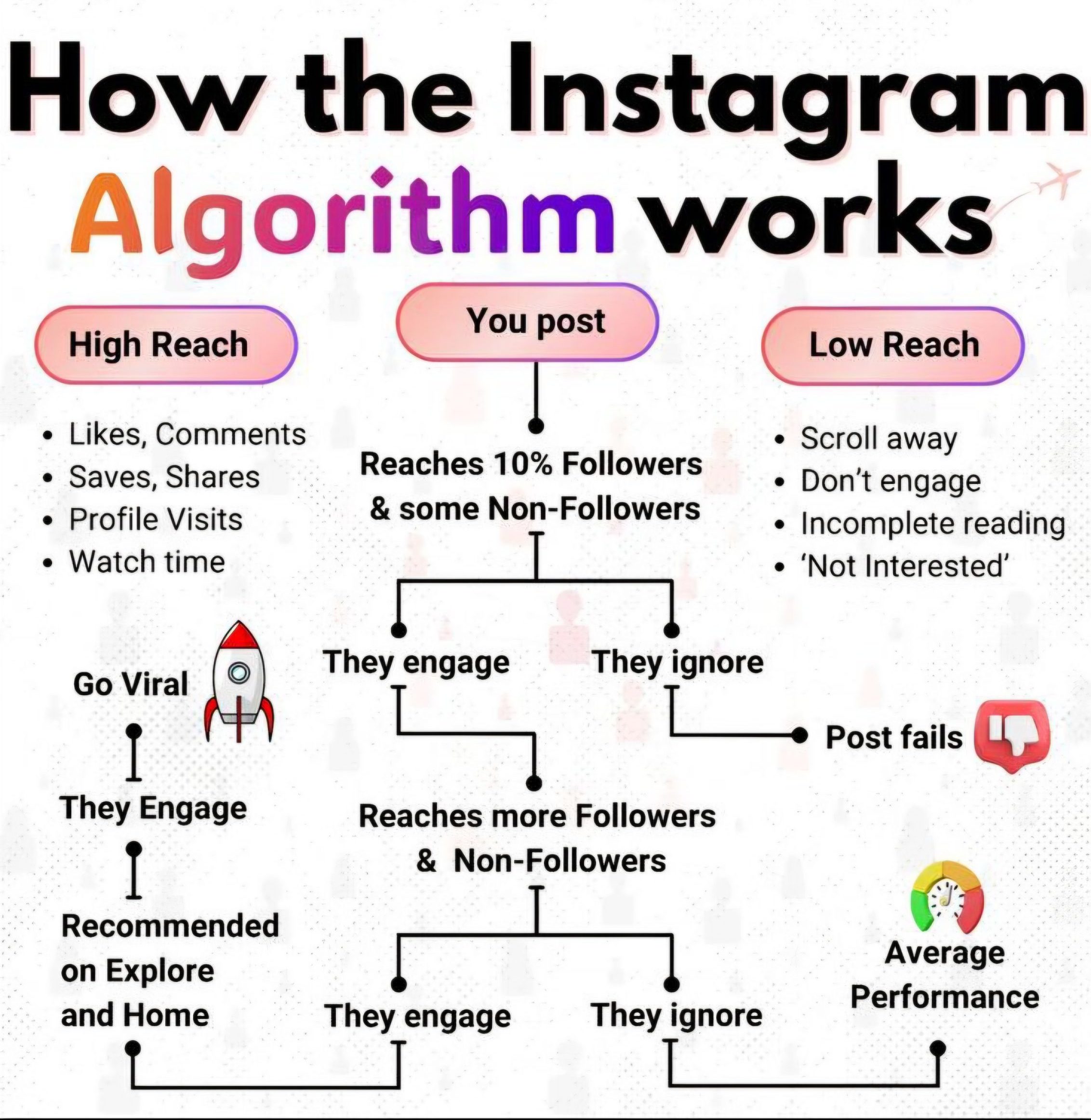
Instagram’s algorithm has shifted dramatically. If you’re still optimizing for likes, you’re playing last year’s game. In 2025, the metric that matters is watch time on Reels followed by saves and shares.
The algorithm distributes your content in waves. First, it shows your Reel to a small test audience (500–2,000 accounts). If that group watches past 50% and saves or shares, Instagram boosts it to a broader audience. This is why the first 3 seconds of every Reel must create a pattern interrupt — a visual hook that stops the scroll.
Post Reels 4–5x per week. Use trending audio (find it in Instagram’s “Trending” tab). Add text overlays because most people watch without sound. End with a save-worthy takeaway a tip, a checklist, or a surprising fact.
For carousels, make your first slide a bold headline question. Curiosity drives swipes, and swipes signal engagement. Repurpose your best blog content into 7-slide carousels weekly.
Consistency beats virality. One viral post won’t build a brand. Showing up every day with value will. LeverageNode exists to help you do exactly that
In 2025, your personal brand is your most valuable asset more than your degree, your job title, or your resume. It’s what people say about you when you’re not in the room.
Start with a clear positioning statement: who you help, what problem you solve, and what makes your approach different. Write this in one sentence. Put it everywhere LinkedIn bio, Instagram, email signature.
Pick one platform and dominate it before spreading to others. For B2B, LinkedIn is non-negotiable. For D2C, Instagram or YouTube. Post your specific insights not generic advice, but hard-won lessons from your own experience.
Document your journey. People don’t just buy expertise; they buy the story behind it. Share your failures alongside wins. Authenticity creates connection, and connection creates trust.
Engage with 10 people daily. Comment meaningfully on posts in your niche. Be the person who adds value in every conversation, not just broadcasts their own content.
In 90 days of consistent effort, you won’t just have followers you’ll have an audience that trusts you. And a trusted audience converts into clients, partnerships, and opportunities that no ad campaign can manufacture.
The biggest content problem isn’t creativity it’s consistency. Most creators and brands go silent for days because they haven’t built a system. This changes that.
Every month, do one Content Mining Session. Open a blank doc and answer these 5 questions: What are 3 common mistakes my audience makes? What do they wish they knew when starting out? What results have I or my clients achieved recently? What’s a hot trend in my niche this week? What do I believe that most people disagree with?
Those 5 questions give you 15–20 raw ideas. Now categorize them: educational, inspirational, entertaining, promotional. Aim for 50% educational, 25% inspirational, 15% entertaining, 10% promotional.
For each idea, create 3 content pieces: a short-form social post, a 200-word blog post, and a 60-second video script. One idea, three outputs, three platforms covered.
Use a simple Notion or Google Sheets calendar. Assign one post per day. Batch create on Sundays. Schedule everything using Buffer or Later. You’re now posting daily without the daily stress.
Content marketing is a long game. The calendar is your short-game discipline. Build the system once, run it forever.
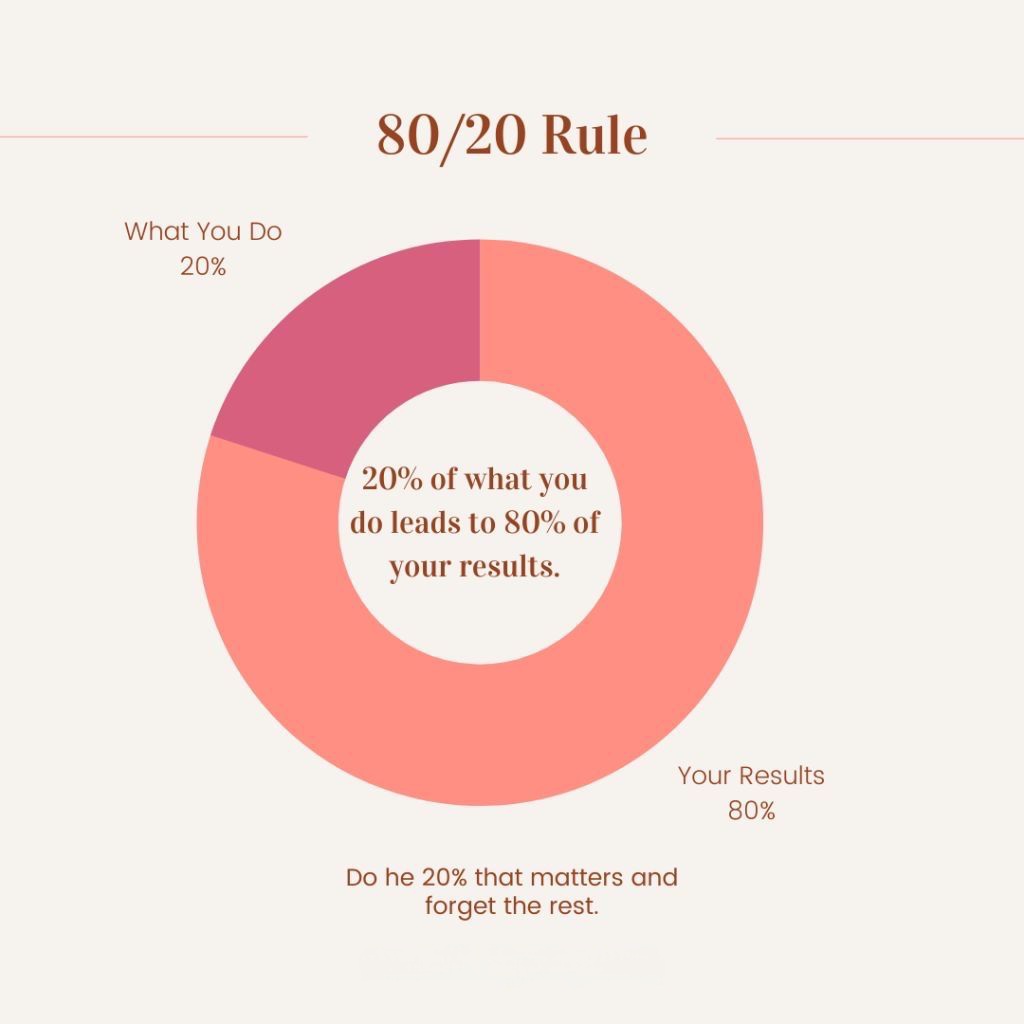
Here’s a hard truth: most of what you do every day doesn’t actually matter. The Pareto Principle 80% of results come from 20% of efforts applies brutally to work, marketing, and business.
Start with an 80/20 audit. Write down every task you did last week. Now mark each one: does this directly drive revenue, growth, or strategic goals? Be ruthless. Most tasks emails, meetings, minor fixes are 80% work that produces 20% results.
Identify your power hours. For most people, peak cognitive performance is within the first 3 hours of waking. Block this time for your highest-leverage work: creating, strategizing, building. Guard it like a meeting with your most important client.
Batch low-leverage tasks. Check email twice a day, not constantly. Handle admin in a single block. Use templates for repetitive communication.
The goal isn’t to work less it’s to ensure your best hours are spent on your most important work. One hour of focused, high-leverage effort beats four hours of distracted busyness every time.
This week: audit your task list. Kill or delegate 3 things that don’t belong in your 20%. Put that time back into the work that actually moves your mission forward.
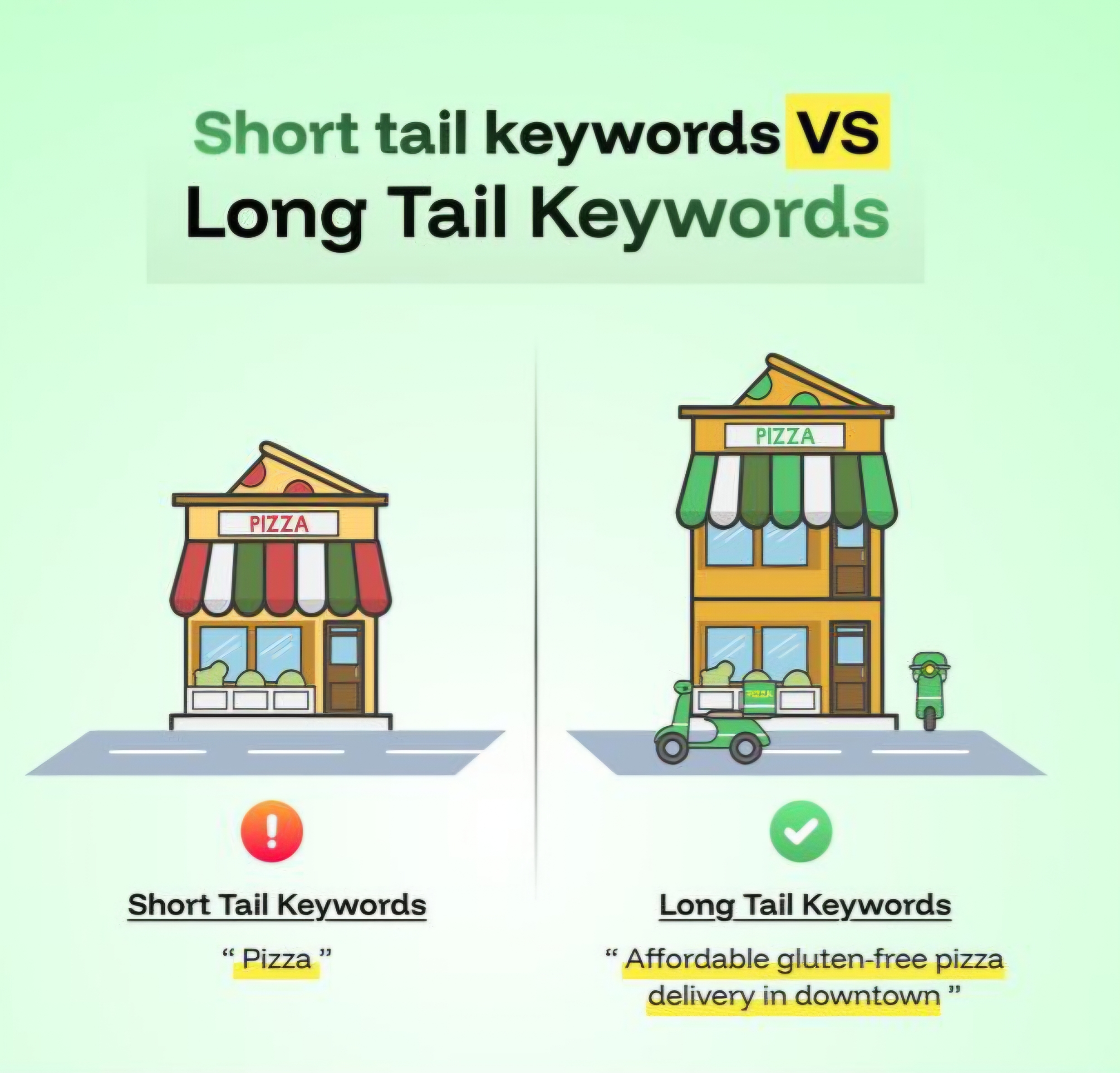
Most brands make the same SEO mistake: they target short, high-competition keywords like “digital marketing” and wonder why they can’t rank. The smarter play is long-tail keywords.
Long-tail keywords are phrases with 3+ words and lower search volume but they’re gold for three reasons. One, they’re specific, so the person searching has high intent. Two, competition is dramatically lower, so ranking is faster. Three, they convert better because the searcher knows exactly what they want.
Use Google’s autocomplete as your first research tool. Type your core topic and note every suggestion. Those are real queries real people are searching. Also check “People Also Ask” and “Related Searches” at the bottom of results pages.
Free tools like Ubersuggest, AnswerThePublic, and Google Search Console surface hundreds of long-tail variations. Filter for keywords under KD 30 (keyword difficulty) with 100–1,000 monthly searches. These are the achievable wins.
Write one dedicated blog post per long-tail keyword cluster. Answer the question thoroughly better than any existing result. Add an FAQ section at the bottom targeting related queries.
In 90 days of this strategy, you’ll have a portfolio of ranking pages driving consistent, qualified traffic without fighting the big players on their terms.
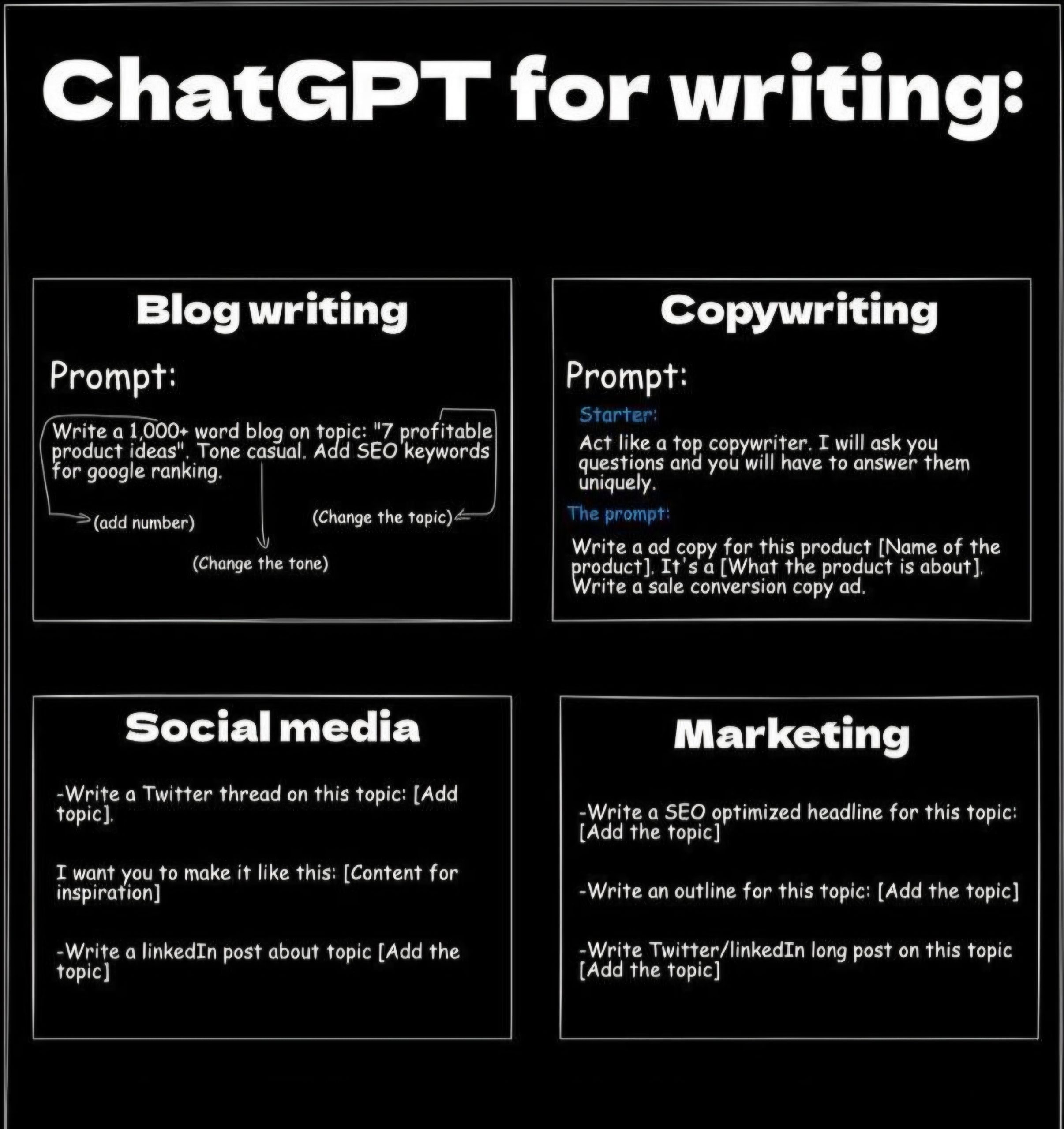
ChatGPT won’t write great ad copy if you prompt it like a beginner. The difference between generic output and high-converting copy is in the quality of your prompt.
Use this framework: Role + Context + Audience + Goal + Constraint. Example: “You are a direct-response copywriter. I sell custom shirts online in India. My target customer is a 28-year-old professional who wants to look sharp but hates ill-fitting clothes. Write a Facebook ad hook that creates curiosity and stops the scroll. Keep it under 25 words.
That prompt produces specific, targeted copy. Compare it to “write me an ad for my shirt brand” the output difference is night and day.
Always ask for 5 variations. Test them all. The first idea is rarely the best. Ask ChatGPT to rewrite the winner using a different emotional trigger: urgency, status, fear of missing out, or social proof.
For longer ad body copy, give ChatGPT your customer’s biggest pain point and your product’s unique mechanism. Ask it to write in the Problem-Agitate-Solution format.
AI is your first draft engine you are the editor. Tighten the language, add your brand voice, and remove anything that sounds generic. The brands winning with AI aren’t replacing creativity; they’re accelerating it.
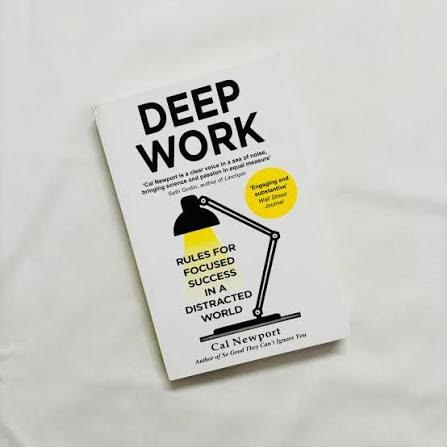
Cal Newport coined the term “deep work” cognitively demanding tasks performed in a state of distraction-free concentration. In 2025, this skill is becoming rare, and therefore extraordinarily valuable.
The average knowledge worker checks their phone 96 times per day. Every interruption doesn’t just cost the interruption time it costs an average of 23 minutes to regain full focus. Do the math: constant distraction effectively steals hours from your day.
Build your deep work practice with these steps. First, choose your depth ritual: same time, same place, same duration. The brain learns that this context = focus mode. 6–10 AM is ideal before the world demands your attention.
Second, remove temptation at the environment level. Phone in another room. Site blockers on (Freedom, Cold Turkey). Notification badges off. Remove friction from focus, add friction to distraction.
Third, track your deep work hours. Most people are shocked to find they average less than 90 minutes of real focused work per day. Set a goal of 4 hours. This single shift will multiply your output.
Fourth, schedule shallow work (email, admin, calls) in the afternoon. Don’t let shallow work colonize your peak hours.
The person who masters deep work in a distraction-saturated world has an unfair advantage. Build this skill now.